

Nearly 80% of airsoft players say that the ranking system directly influences the atmosphere and strategy on the field. This hierarchy, inspired by military models, shapes not only the gameplay but also the relationships and progression between participants. Understanding how ranks work and their meaning in airsoft allows players to better integrate into their team, progress effectively, and avoid mistakes that hinder development in this exciting sport.
Table of Contents
- Definition of ranks in airsoft
- Varieties and grading systems used
- Criteria for awarding and progression of grades
- The role of ranks in the dynamics of the game
- Common mistakes and best practices to adopt
Key Points
| Point | Details |
|---|---|
| Military hierarchy | Airsoft ranks are inspired by military structures, defining clear roles for players. |
| Progress criteria | The progression of ranks is based on technical, tactical and behavioral skills, evaluated by peers. |
| Collective role | The ranks structure the game dynamics, promoting coordination, motivation and a realistic simulation. |
| Best practices | Avoiding overestimating one's skills and adopting a sporting attitude are essential for progressing in the airsoft community. |
Definition of ranks in airsoft
In the world of airsoft, ranks are an essential hierarchical system that structures teams and defines the roles of participants. Directly inspired by real military organizations, these ranks allow for the simulation of a command structure closely resembling authentic tactical environments. According to Wikipedia , airsoft is a military simulation game where participants use replica weapons to fire plastic pellets, within a structured organization.
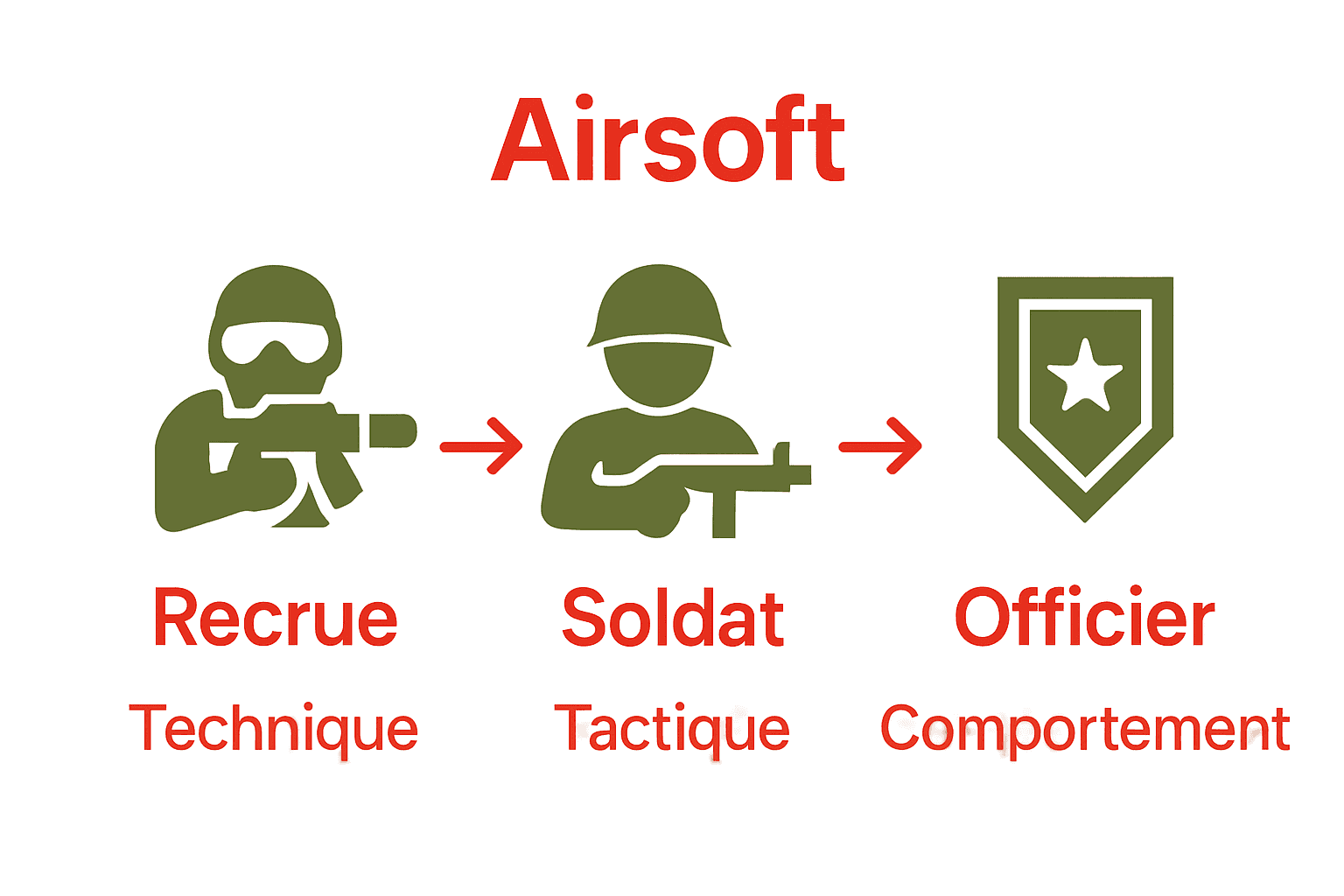
Airsoft ranks generally reflect several levels of responsibility and skill. Several main categories can be distinguished:
- Rookie grade : The entry level for new players
- Soldier rank : An intermediate level with more experience
- Non-commissioned officer rank : Corresponds to tactical team leaders
- Officer rank : The highest level, responsible for overall strategy
Each rank entails specific responsibilities during games.
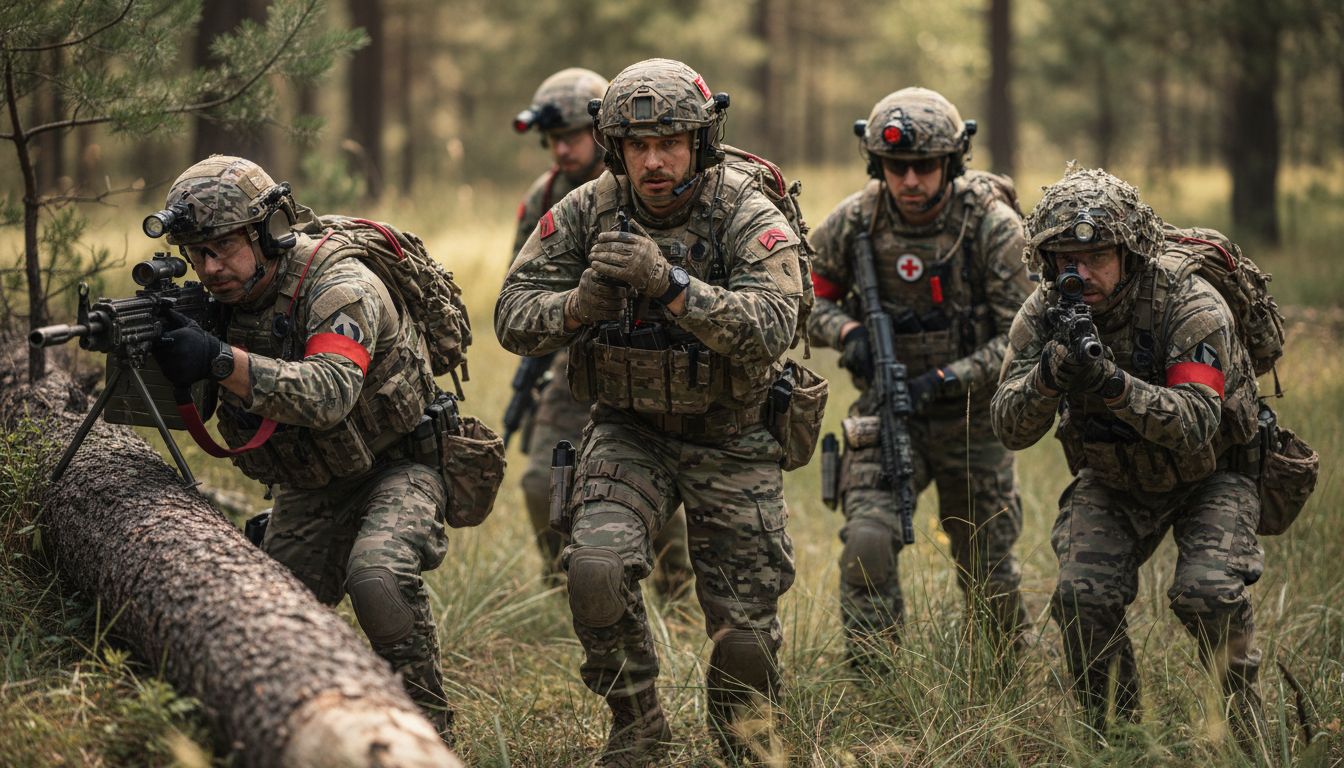 A player with a higher rank will, for example, be able to lead teams, coordinate tactical movements, or make complex strategic decisions. These ranks are not merely symbolic; they truly reflect the level of skill, commitment, and technical knowledge of players in military simulations.
Advancement between these ranks is generally achieved through peer recognition, validation of technical skills, and demonstration of leadership on the field. Appropriate airsoft equipment can also play a significant role in a player's credibility and progression within their community.
Varieties and grading systems used
Airsoft ranking systems exhibit remarkable diversity, inspired by military models but adapted to the specific dynamics of this tactical sport. Each club or association can develop its own hierarchical system, with nuances that reflect its culture and internal practices.
Several main approaches can be identified in the structuring of grades:
- Traditional military system : Direct reproduction of French military ranks (soldier, corporal, sergeant, lieutenant)
- Modular system : Based on experience and technical skills
- Points system : Progression calculated based on performance and commitment
- Free system : A more informal approach, with less formalized distinctions
Some airsoft groups opt for hybrid systems that combine several of these approaches. For example, a club might integrate elements of technical progression while maintaining a hierarchical structure similar to military organizations. Ballistic protection also plays an important role in credibility and recognition within these systems.
The complexity and rigor of the grades vary significantly across communities.
Some groups emphasize strict progression criteria, involving technical tests, leadership assessments, and demonstrations of tactical skills. Others adopt a more relaxed approach, where ranks are primarily symbolic and aim to encourage participation and teamwork.
Criteria for awarding and progression of grades
Rank progression in airsoft is based on a set of specific criteria that assess players' technical, tactical, and behavioral skills. These criteria vary from club to club, but generally follow a logic of professional advancement and demonstration of abilities.
The main evaluation criteria include:
- Technical skills : Proficiency with equipment, shooting accuracy, knowledge of equipment
- Tactical skills : Strategic thinking, team coordination, quick decision-making
- Commitment : Regular participation, involvement in events, team spirit
- Behavior : Respect for the rules, game ethics, fair play
Progression through the ranks generally follows a structured process. A beginner player will typically have to demonstrate their skills in several games and then be evaluated by experienced members or a rank board. Appropriate airsoft equipment can also play a significant role in this evaluation, reflecting the player's professionalism and seriousness.
Some clubs implement formal exams or probationary periods to validate progress. These assessments may include practical tests, tactical simulations, or interviews designed to measure the player's understanding of the strategic and safety principles of airsoft. The goal is to ensure that each rank truly represents a level of skill and maturity recognized by the community.
The role of ranks in the dynamics of the game
Ranks in airsoft represent much more than a simple hierarchical system. They constitute a central element that structures the dynamics and interaction between players, bringing depth and realism to tactical simulations. They allow for the creation of an organization closely resembling real military environments, while maintaining a fun and strategic framework.
Their main functions in the game are divided into several dimensions:
- Tactical coordination : Clearly define roles and responsibilities on the field
- Personal motivation : Encouraging progress and continuous skills improvement
- Realistic simulation : Reproducing a military hierarchical structure
- Team management : Facilitating organization and communication during games
The impact of ranks goes far beyond their symbolic value. A ranked player typically has increased responsibility in strategic planning and the conduct of operations. Appropriate airsoft equipment complements this, enhancing the credibility and effectiveness of players according to their skill level.
Each rank represents a journey, a progression that values experience, technical skills, and leadership. It's not simply a title, but a recognition by the community of a player's true ability to understand and implement complex strategies during airsoft games.
Common mistakes and best practices to adopt
In the airsoft ranking system, certain mistakes can compromise a player's progression and credibility. Understanding and avoiding these pitfalls is essential to maintaining a high level of performance and respect within the community.
The most common mistakes to avoid include:
- Overestimating skills : Claiming to be at a higher level without possessing the corresponding skills
- Disrespect for hierarchy : Ignoring instructions from higher ranks
- Unsportsmanlike conduct : Failure to respect the rules or other players
- Tactical improvisation : Acting without coordination with the team
- Equipment neglect : Improper use or maintenance of equipment
Sniper camouflage techniques perfectly illustrate the importance of technical mastery and adherence to best practices. A player who progresses responsibly must constantly strive to improve their skills and understand the subtleties of interactions within their unit.
Best practices involve developing a game ethic based on respect, continuous learning, and positive contributions to the team dynamic. This means paying attention to advice from experienced players, constantly working on one's technique, and demonstrating a sincere commitment to the values of airsoft: teamwork, discipline, and fair play.
Optimize your progress with the right airsoft equipment
Understanding the meaning of ranks in airsoft allows you to clearly identify your responsibilities and objectives during games. To successfully progress through each level, it's essential to have appropriate equipment that enhances your credibility and effectiveness on the field. Whether you're starting out as a recruit or taking on an officer role, your gear should reflect your skill level and support your tactical abilities.
Discover our selection of tactical airsoft vests for optimal protection and enhanced mobility. Don't forget to complete your outfit with a tactical airsoft helmet that offers essential safety and comfort. For all your gear needs, visit BDU Airsoft today and equip yourself like a true pro. Don't leave your progress to chance; gear up now to excel on the field.
Frequently Asked Questions
What is a rank in airsoft?
Ranks in airsoft are a hierarchical system that structures teams and defines the roles of participants, inspired by real military organizations.
How does one progress through the ranks in airsoft?
Progression between ranks is achieved through peer recognition, validation of technical skills, and demonstration of leadership in the field.
What are the criteria for awarding ranks in airsoft?
The main criteria include technical skills, tactical abilities, commitment to the game, and exemplary behavior towards the rules and other players.
What is the importance of ranks in the dynamics of the game?
Ranks allow for the coordination of roles and responsibilities, motivate players, simulate a military hierarchical structure, and facilitate team management during games.


